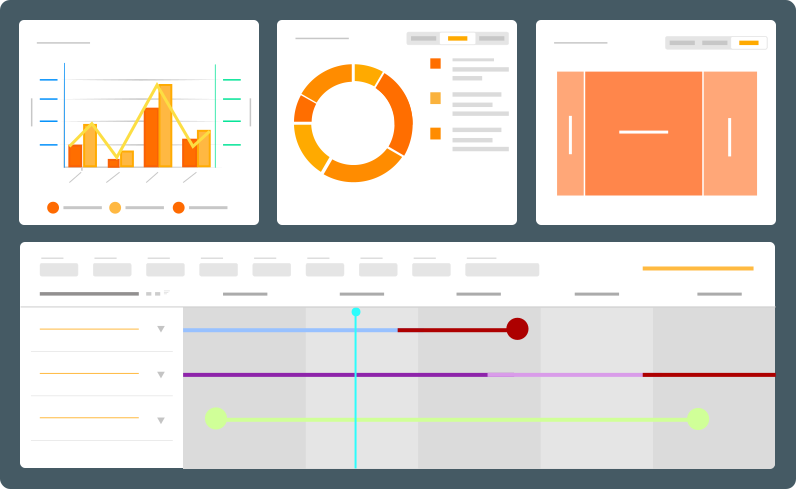
Fairview is an internal project management tool created by MadeLabs with a strong emphasis on people and collaboration. While Fairview was originally designed for small-to-mid sized tech teams, the market for general-purpose project management tools is highly saturated.
Our team partnered with MadeLabs to answer a foundational business question:
Where should Fairview compete—and why?
Over a 16-week Experience Studio project, we conducted market and user research to identify an underserved industry where Fairview’s strengths could offer clear differentiation. The project culminated in a data-backed recommendation and a reimagined version of Fairview, tailored to a specific market: social media campaign management.
The Problem
Most project management tools are built for generalized workflows—engineering teams, product roadmaps, or internal task tracking. However, many industries manage work that is people-heavy, deadline-driven, and financially complex, yet rely on fragmented tools to get the job done.
For MadeLabs, the challenge wasn’t improving Fairview’s usability—it was deciding who Fairview is actually for.
My Role
I worked as a UX researcher and strategist on a cross-functional team. I contributed to market research, SWOT analysis, stakeholder mapping, interviews, synthesis, and the final strategic recommendation. I also helped translate research insights into low-fidelity concepts that showed how Fairview could realistically evolve to serve a new industry without a full redesign.
The Goal
Our goal was to identify:
An underserved market with clear project management pain points
A niche where Fairview’s people-first features created real value
A direction that balanced business opportunity, feasibility, and differentiation
We focused on answering three guiding questions:
What markets could Fairview work in?
How does project management function in those markets?
How might Fairview be applied with minimal structural change?
Exploring the Market Landscape
We began broadly, brainstorming over 25 possible industries within professional product and service sectors. From there, we narrowed the list based on two key constraints:
Accessibility to real users for research
Lack of industry-specific project management tools
After initial research, we focused on five potential markets:
Start-up communities and incubators
Real estate
Nonprofits and NGOs
Social media marketing agencies
Agricultural businesses
Through secondary research and early analysis, we eliminated markets that were either oversaturated, poorly aligned with Fairview’s strengths, or unlikely to adopt a new tool.
Prioritizing with Stakeholders
To ground our research in business reality, we conducted SWOT analyses for each remaining industry and presented our findings directly to MadeLabs leadership.
Together with the sponsors, we evaluated each option using a value vs. effort prioritization matrix, assessing:
How valuable Fairview would be in that industry
How much effort Fairview would need to adapt
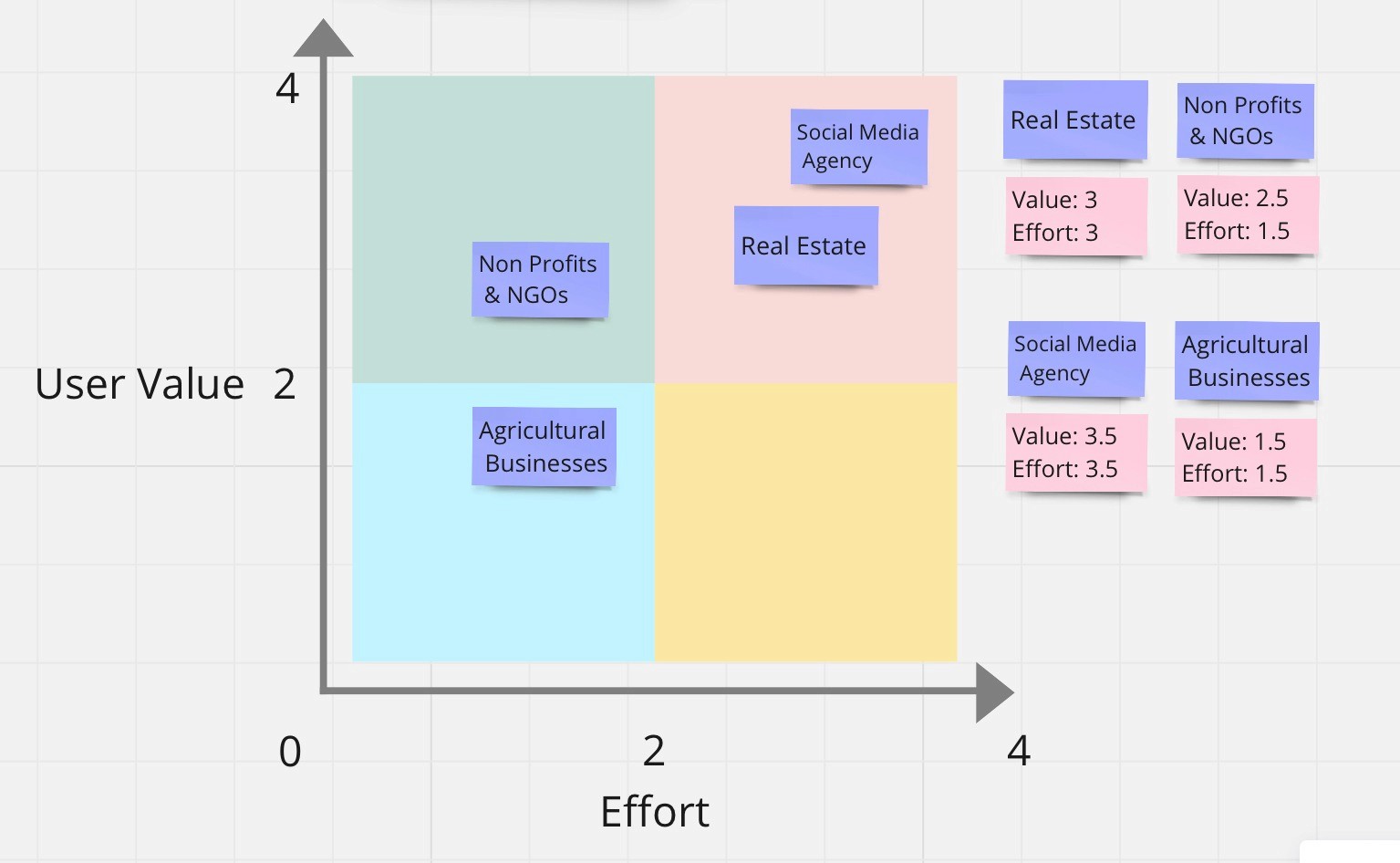
This collaborative exercise narrowed the field to two finalists:
Real estate
Social media campaign management
From there, deeper research helped us make the final call.
Why Social Media Campaign Management
As we investigated both industries further, social media marketing consistently surfaced stronger signals.
Campaign managers in this space:
Coordinate large numbers of influencers
Manage tight timelines and fluctuating budgets
Track deliverables across platforms
Communicate with stakeholders using multiple disconnected tools
Most teams relied on four or more tools at once—Excel, Airtable, email, Slack, analytics platforms—just to manage a single campaign.
Despite the scale and financial importance of influencer marketing, there was no true “one-stop shop” for managing people, budgets, timelines, and performance together.
Research Insights
Interviews revealed systemic fragmentation.
Campaign managers described themselves as “professional kitten herders,” juggling communication, approvals, payments, and performance tracking manually. Influencers echoed similar frustrations, citing unclear expectations, miscommunication, and delayed or opaque payments.
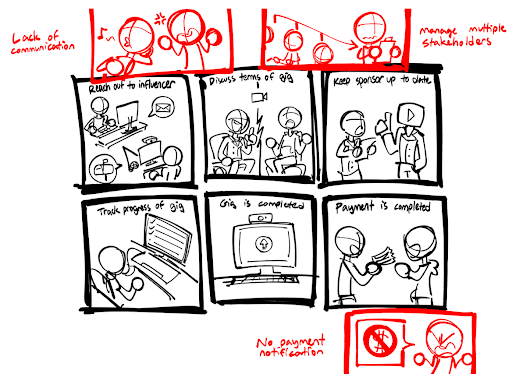
People management was the core pain point.
Unlike traditional project workflows, social media campaigns revolve around external contributors. Managing humans—not tasks—was where existing tools fell short.
Fairview’s strengths aligned naturally.
Fairview already supported:
Resource and people management
Budget tracking
Task and timeline organization
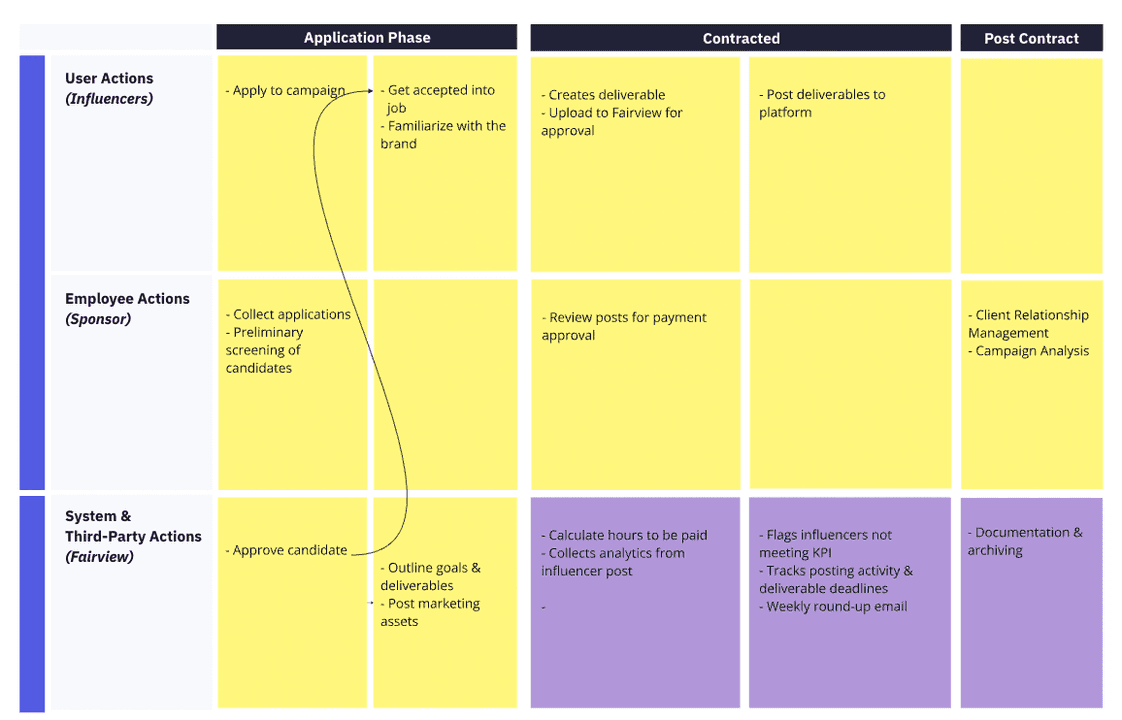
With targeted enhancements, it could fill a gap that existing tools were not designed to address.
Reimagining Fairview as SocialView
Rather than proposing a full redesign, we explored how Fairview could evolve into SocialView—a version of the platform tailored to social media campaign workflows.
Our concepts focused on:
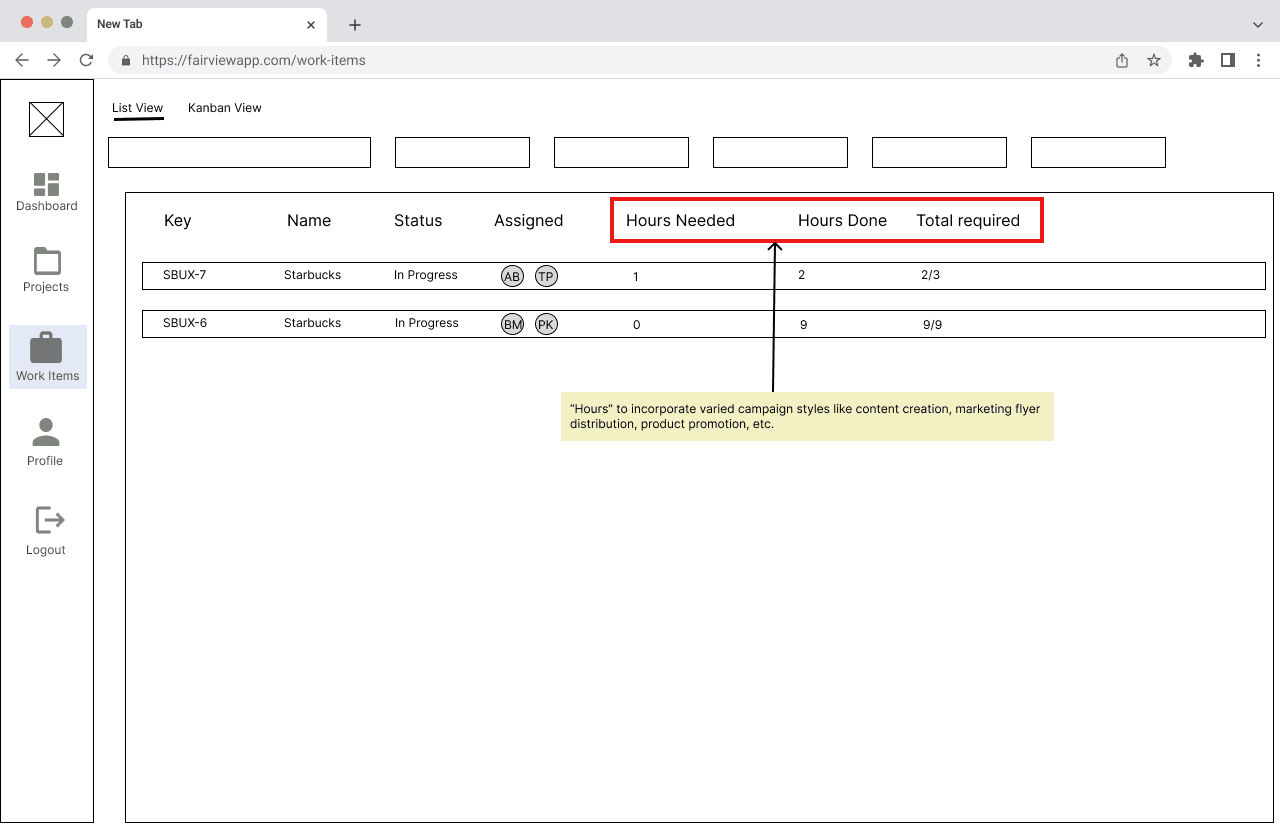
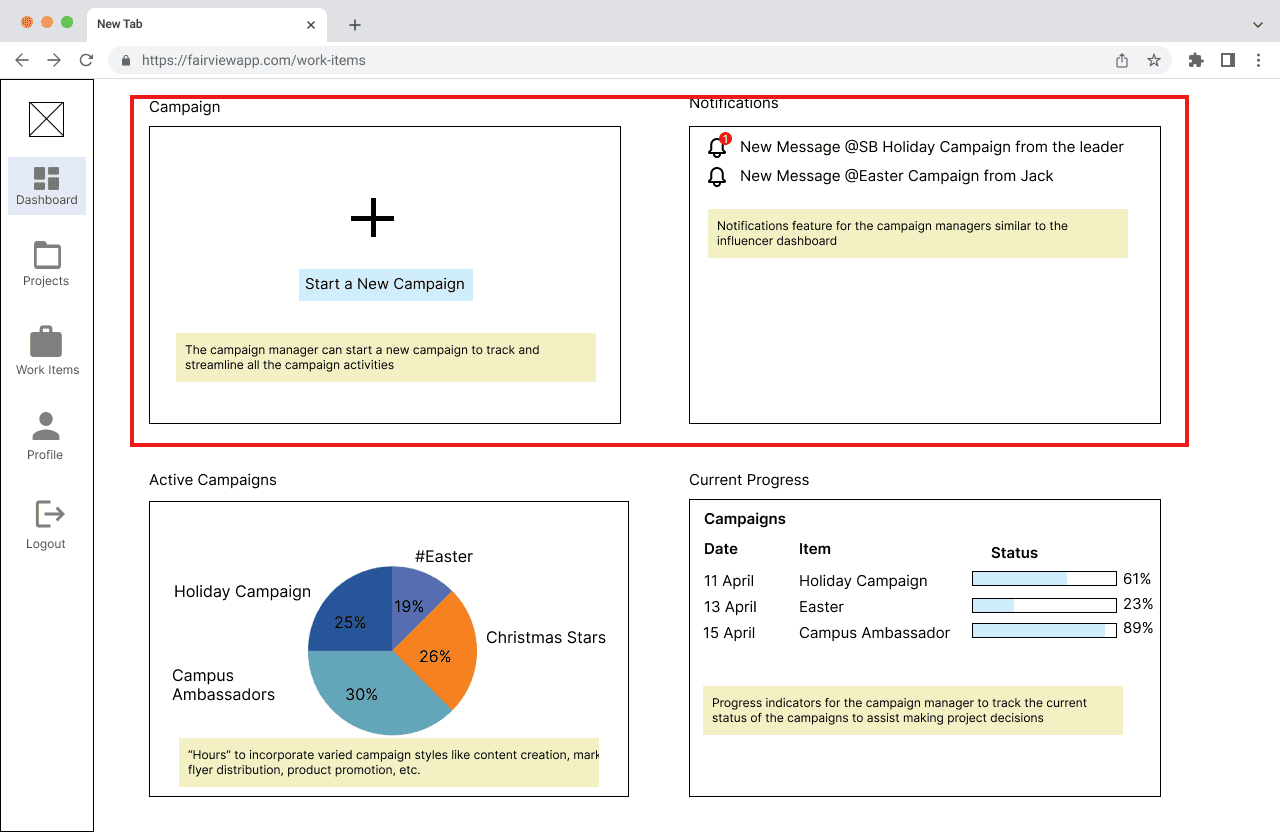
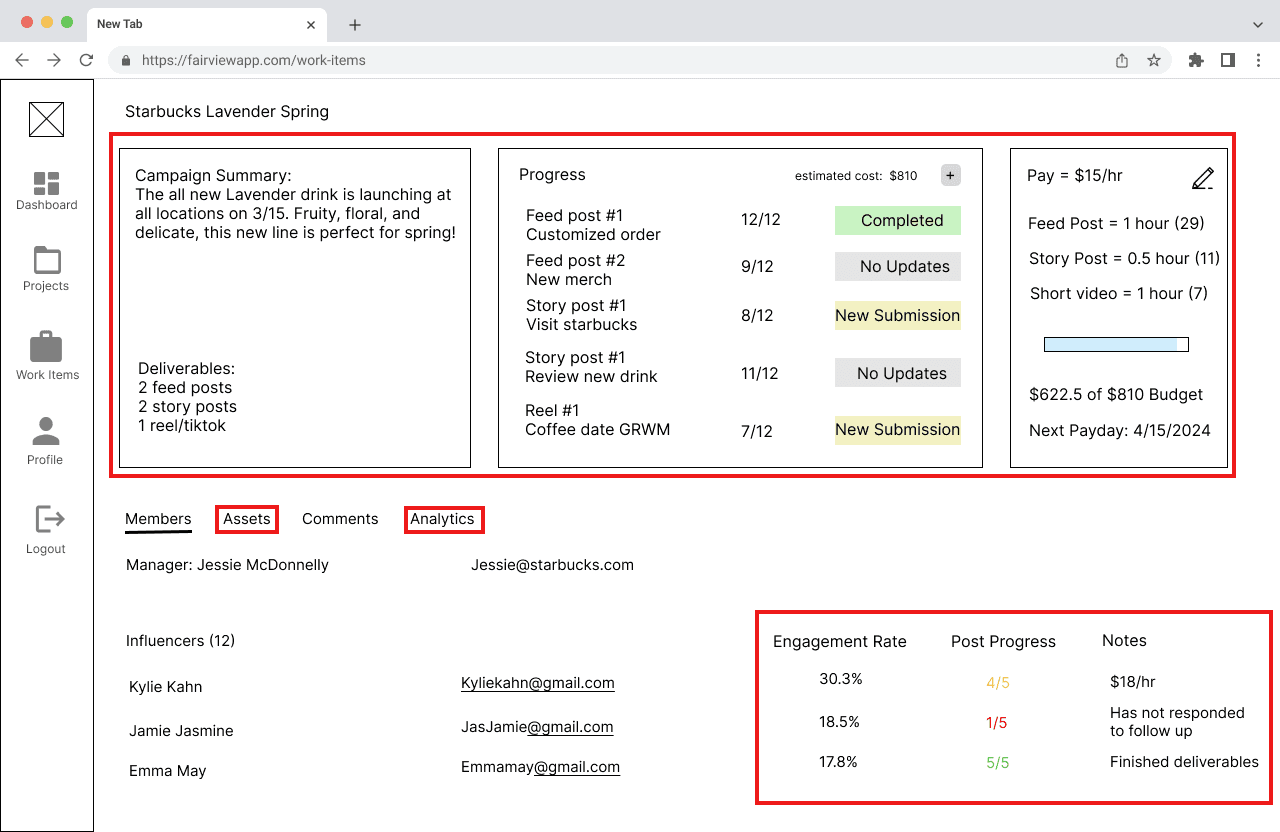
Campaign manager dashboards for tracking influencers, budgets, and deliverables
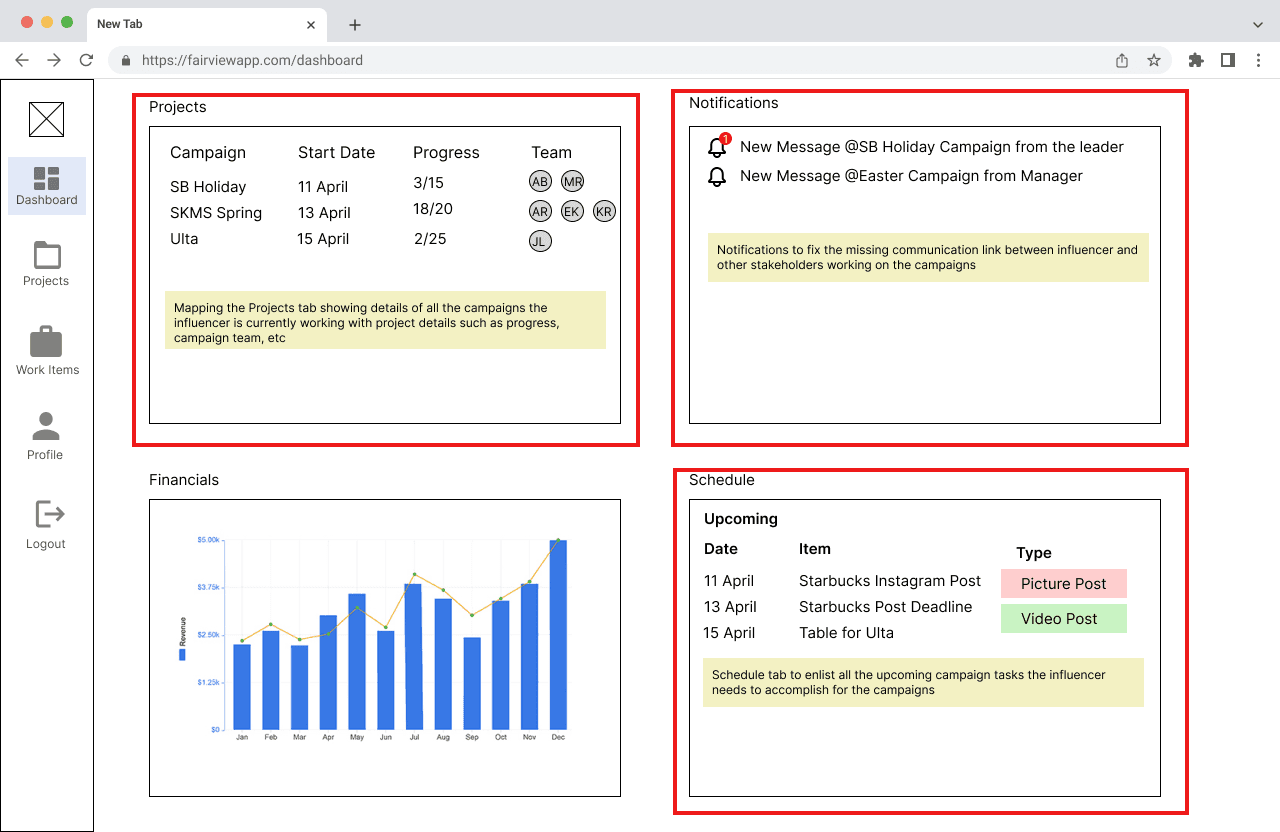
Influencer-facing views that clarify tasks, deadlines, approvals, and payments
Centralized communication and file submission
Automated KPI tracking to reduce manual performance checks
Low-fidelity wireframes demonstrated how Fairview’s existing structure could support both campaign managers and influencers with minimal disruption.
 |  |
 |  |
The Recommendation
We recommended that MadeLabs pursue social media campaign management as Fairview’s initial market entry point.
This direction offered:
A growing, high-value industry
Clear unmet needs
Strong alignment with Fairview’s people-first design
A viable path to differentiation without competing head-on with established PM tools
Impact
The final deliverables gave MadeLabs:
A defensible, research-backed market recommendation
Clear rationale for why social media marketing presents a strategic opportunity
Conceptual designs that made the opportunity tangible
A foundation for future user research, pricing exploration, and product direction
What I Learned
This project sharpened my ability to think beyond interfaces and into product-market fit. It reinforced the importance of grounding design decisions in business constraints, stakeholder alignment, and real operational workflows. Most importantly, it showed how UX research can inform not just how a product is designed—but whether it should exist in a given space at all.